!['Madness in great ones must not unwatch'd go.' [Claudius]](https://lh3.googleusercontent.com/blogger_img_proxy/AEn0k_u0CLBEJj0DNIiqdkbdDXNCsw_f95ZAnfWUAafFu-RzEyDcVUPOvMZfiU8_Cg13bRKwZbVERlJw4kbLGgE8gSlrOoRe4dMW-gME=s0-d)
"Madness in great ones must not unwatch'd go."
Claudius
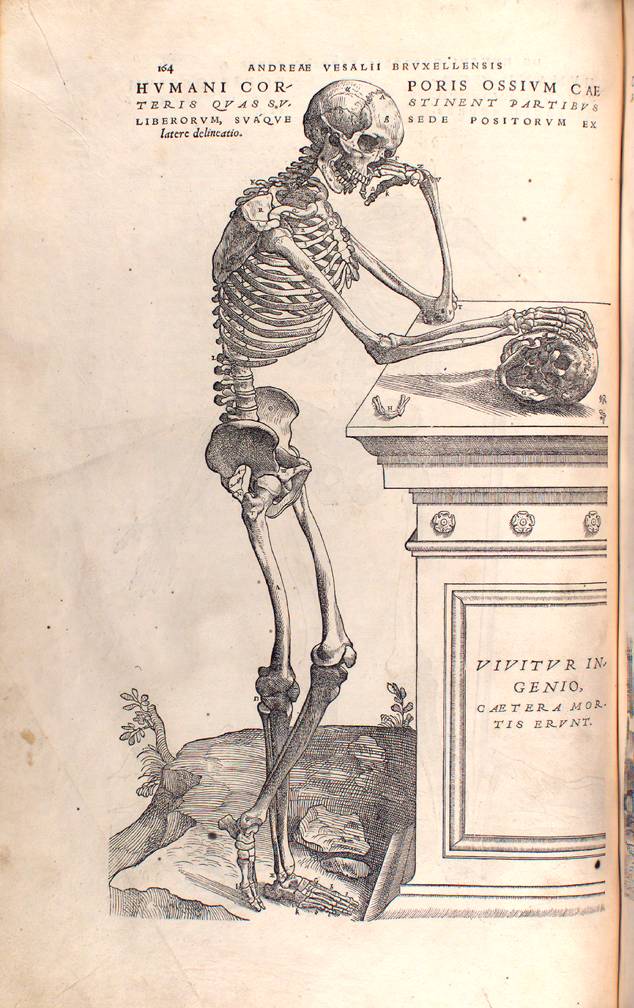
I have a human skull in the living room. It sits on a shelf. For all practical purposes, that's about as far as it goes. I know nothing of it. But nothing does not deter Frank Paynter, and his evocation of Hamlet on reading of my dalliance with Kate Moss surprised me. It shouldn't have. The Colonel, Frank—not my grandfather—has through sheer bloody-mindedness, a disturbingly acute mind, and wordplay more pointed that any rapier, reached the highest rank possible in the mighty army of the EGR Irregulars.
It's not for nothing that apparently nothing does not escape his notice.
After my father's death in 2000, I carried his ashes about for eighteen months before disposing of them. My tardiness was due, in part, to having had—on instruction—his remains divided into three portions, two of which were for relatives overseas. I guess everybody wanted a piece of him.
As it turned out, the three boxes remained in the trunk of my car for several months. On taking out weekend shopping, work-related materials, or anything else for that matter, I'd be greeted by all that remained of my father—who, as I mentioned in one of the posts to which Frank refers, was a pathologist as used to dealing with those no longer of this world as I became used to dealing with him. To prevent them getting wet, I took his ashes out one winter and stashed them in a bedside cupboard for several months. My relatives no longer seemed all that keen on shipping out portions of their dead father, so I was lumped with him. In three boxes, each covered by a certificate of cremation.
In June 2002, I took the old man's remains down to the Atlantic and, casting fire on the waters, gave him a Viking's funeral. It was a fitting end to a great man and my best friend.
"We'll teach you to drink deep ere you depart."
Hamlet
 Click the graphic to appreciate Amazon's Shakespearean wit
In a library of incomparable works, Hamlet arguably stands out as Shakespeare's best. From its opening, it's apparent we're not dealing with the bard's usual penny horrible. The result? Most are baffled, some trash the protaganist—for the most part, the only really sane character at court, and others call the play an intricate mess. Some write dissertations on the psychology of the work and others quote, with simplistic selectivity, from its vital complexity.
I last read from Hamlet in 1979 (I've seen Shakespeare performed only on screen, but I've not seen this play at all), and was gob smacked by that much of it I read. I had little idea why. Today, I do. In Hamlet, Shakespeare brings it all together and reflects life in the raw. Forget your paupers and peasants and princes and kings. Hamlet and all those with whom he interacts are each of us.
On hearing of Hamlet's encounter with his murdered father's ghost, it's perhaps inevitable, given his day-to-day circumstances (his mother's marriage, within a month, to his uncle and father's poisoner—who then becomes his 'father') that we should, like the prince, think first of 'revenge'. At the theatre, witnessing a play within the larger play of life, and before we begin to appreciate the depth of it, we are pretty superficial—hollow vessels into which Shakespeare pours his genius.
And revenge is what society expects of us. Hence, in the United States, the last march of the 1,000 and the deaths of millions beneath the bombs. Given that Shakespeare wrote the play several hundred years' ago, revenge is what society's (we've) always expected of us (ourselves).
But on whom exactly do we wish Hamlet to exact his revenge? His father Hamlet, his guilt-ridden uncle Claudius, his adulterous mother Gertrude, the fatuous Polonius, the duplicitous duo of Rosencrantz and Guildenstern, Denmark—a country groaning under the weight of war and pervasive evil, or himself? Who pays for his mother's and his uncle's sins? Because the economy of life dictates that somebody, or all of us, must pay. Drawing us in with its main character, it's this bloody but unsatisfying and transient social convention, i.e. revenge, which lends the play its mystery.
Hamlet wants revenge only insofar as we, through his father's ghost (whom he has not laid to rest) and our projection, want it. Unlike Hamlet, who—appreciating life's cruel paradoxes—is here, there and everywhere, a popular, talented, and courageous prince possessed of a disposition shaken "...with thoughts beyond the reaches of our souls", it is we who carry the desire for revenge through the play. The brooding prince realises its futility and it is left to us to feel, "Get on with it, man. Kill the Cheney character and let's all go home."
Known to most of us, and wrapped in the platitudes of the hypocritical, meddlesome Polonius, whom Hamlet dispatches before anybody else, prevarication and equivocation are Shakespeare's game. A master to our novitiates, he messes with our heads. Frequently accused (perhaps even more by himself than by the play's critics) of being a procrastinator, Hamlet is anything but. Unlike his peers, and those who witness his tragedy, he lives on many levels. "...I have that within which passeth show; These but the trappings and the suits of woe."
He is passionate, active (a continental traveler and better than Fortinbras at swordplay), brilliant, moody, violent, sensitive... he encompasses our humanity, embodies our prejudices and uncertainties, our contradictions and ambiguities. He sees more and he feels more than most. Far from being a procrastinator, he's too busy practically and mentally dodging the slings and arrows of outrageous fortune to indulge in childish games of tit for tat. And whatever need for revenge he does feel has more to do with an internalised anger born of trying to reconcile life's conflicts projected onto those around him than it has to do with avenging his father's murder.
 We know Hamlet loves Ophelia, a most unlikely Hilarity Jane. Gnawing at the roots of his and our self-negation, it is in his protection of her from his own possible intent, that he shows himself both empathically intuitive and, paradoxically, a vicious sociopath. He is frequently deemed, by the play's characters, we who see him through their eyes, and the play's critics, mad. If he is mad, his is a studied madness because, not do we only see it only through the eyes of the dupes he so despises (I guess that includes us); Shakespeare deliberately juxtaposes the eminent sense and scathing wit of his supposed non-sense with the babble of Ophelia who, through her differently pointed words and actions, shows herself decidedly barkers and later, most unlike the willow, snaps.
 More, Horatio is, throughout the play, a decidedly sober and well-grounded confidante. He mirrors the clear-sighted, cold-blooded sanity of Hamlet's insight and far-sighted level-headedness.
[I dreamt of my wife a couple of months ago. I seldom remembers dreams, so the short image impressed itself on me and I related it to my therapist—yeah, yeah... I'm overlooking a lake, and she, neither alive nor dead but both, is staring up at me as she rises slowly to just beneath the surface, where she remains. Bedevilled by a severe personality disorder that's visited hell on the family over the years, the dream immediately made sense to me. But it did not make as much sense as it did when I came across the scene of Ophelia's death.]
Why pretend insanity? I assume Shakespeare merely dresses Hamlet's bile, confusion, mistrust of self, grief, and predilection for unsettling his vile mother and uncle as madness to more clearly delineate the crass vulgarity of those about him. It is in anger, with a barbed contempt, and through a veil of near-misanthropic scorn, that Hamlet uses his crazed "Words, words, words...", an armoury suited to unsettling the sensibilities of unfeeling, unseeing dullards.
He is not at all insane.
Who is Hamlet? He is his mother, his father, and his uncle. Like it or not, we carry our ancestors within. Born of them, we take over from them. After them, we are next in the firing line. From babies born chalk-white and blue, we grow and go unwillingly to our crabbed age and death. And, as Laertes points out to Ophelia, we are 'constrained' by those who came before. An existential dilemma, it's also a bastard Satre would not appreciate.
Our natures cannot choose their origins or their ends. Whether we keep our parents' ashes in cupboards—yeah, we've pieces of the skeleton lying about the house (it belonged to a friend, I swear) and we make merry with the bones—or eschew our ancestral constraints, we know and fear our entrapment and eventual death in those who gave us life.
And this, intuitively, Hamlet the Younger, he who rails at entropy (be it natural or moral), knows. He echoes and reiterates one of Shakespeare's recurring complaints, that of our transient 'being'. We are all idiots, "...full of sound and fury, signifying nothing." Why rail at it? Why the need to contemplate suicide or 'death on our own terms' before we mature to an acceptance of the so-called natural order? Swine ourselves, we always want more. We want a shot at redemption and immortality.
Paradoxically, though, if Hamlet and we are to survive ourselves and save others' similar fates, our task is to disobey, overcome, kill, destroy and, finally, lay to rest the ghosts of those who came before us.
So where lay the tragedy of this brilliant man with whom we identify through passion felt in a sea of indifference? Why do so many feel Hamlet to be a 'mystery'? The tragedy of his story lies, after his exposure of his uncle and his escape from murder in England, not in his effecting a climactic slaughter rather than a revenge, but in his having to die to outlive his forbears. His tragedy is that by killing the king in selfish anger, he becomes the uncle he so despises.
Crushed by life's ambiguities, the passionate, insightful prince who could deliver Denmark from its drunken swinery and would be king—and, indeed, was in the half-hour of dying following his poisoning and the murder of Claudius, Gertrude (a mother he cannot but love) and Laertes—becomes King Hamlet; but he does so as his father reincarnate, a violent, reactive brute like those he so despises, and he is rendered unremarkable, but for Shakespeare's remarkable rendering of him.
His tragedy is that, in dying in a manner expected of him, he becomes the Hamlet we know, i.e., an all-too-familiar figure.
Hamlet's tragedy likely belongs to all of us; a catastrophic end preceded by a life we ultimately decide is well worth living. Catastrophic? Yes. We each face a personal apocalypse, the sudden obliteration of a life we grow to accept. Also, we all share our poisoned chalices by attempting to 'kill' or transcend those we know (of our and preceding generations) as and before we ourselves shuffle off this mortal coil.
It is the only way we have of becoming ourselves or shooting for immortality. If we are to save ourselves such tragedy, we need to live and die in a manner becoming to and of us; not others. But, in all likelihood, we will do what Hamlet did. Instead of transcending others, we will become them.

"He was a man, take him for all in all, I shall not look upon his like again."
Hamlet
I've a sad feeling my father merely suffered his father. He did not 'bump off' the old bugger and relegate him to the land of the dead. I've a sad feeling my father, great though he was, could have been greater still. Rather than becoming a middle-class Hamlet, whose memory we continue to love and cherish, he might have become more fully himself.
Around thirty-five years ago, he wrote a novel. In much the same way I post in threes or divide my posts into three sections (see my posts on Kate Moss, my grandfather and me), my father's novel comprises three sections. I've two of them on disk right now and had hoped to publish the complete work on this blog. I doubt I will. Sorry, Dad, but you were right. It's a lousy novel. While I'll make use of many wonderful pieces, I'm panning the whole.
[Where are the broad, sweeping strokes of your far-reaching imagination; the genius of your interweaving, conflicting, segueing ideational tides, the crosscurrents, eddies, vortices and still ponds of our innermost thoughts? You had 'em all, but you didn't deliver. Why?]
Without belabouring the point, I'll tell you why. Born in 1922, my father's worldview was shaped before WWII. His stilted, strictured outlook was much like that of his father. Unless you're a baby boomer or over 45, you're probably unlikely to have many friends who grew to adulthood before 1939. To us who have known them, such people—or those whose worldviews could not adapt to the post-war boom—come from another world, one which, when dressed in its restrictive norms and values, is completely alien. Its constraints must have been suffocating.
Frankly, they—and most of their books—were drop-dead boring. Intensely sensitive, intelligent and possessed of a photographic memory, my father appreciated the staid, stolid stodginess of his world and tried to follow the flow to post-modernity. Stuck on ideas that the likes of Eliot represented the most crazed side of our creative natures, he didn't make it. Handicapped as an only son dispatched to boarding school by his policeman father, he lost his mother while fighting in the Western Desert Campaign and, after overcoming two bouts with tuberculosis, subjected himself to ten years of medical specialization before waking up to the fact he was alive.
What did he do with his realization? Crippled by a wretched, self-mutilating Catholicism, he married, had four kids and, beyond the occasional revolutionary outburst wherein he showed an enormous ability to appreciate and assimilate a fast-changing world, he retreated and resigned himself to his lot, eventually dying in a manner expected of him. At least he did so with dignity. That's something in mighty short supply these days.
Becoming oneself is not a part-time thing. I should know. I reckon inherited delusions of honour, romance, duty, ideals and obligation have seen me lose twenty-five years of... what, I don't know. The onset of middle age tells me a large part of it involves attractive women but, in the grander scheme of things, the details don't matter. The feeling persists. I've been gypped. Or I've gypped myself. It's depressing to think that, at some time in the future, some might say, "He lived in a manner expected of him."
Fuck that! I am not my father, my father's ghost or my father's father. And yet, although I will again enjoy Kate's company this weekend—it's disgusting what they ask these girls to do in the pharmaceutical industry; she has realized the error of her ways, has begged me to take her back and I, remembering our happy cavorting last weekend, relented somewhat too easily—realize the absurdity of protest.
A swine, I want more. Perhaps I am reliving Hamlet's futile sense of God's caprice and our injustice. Perhaps, like my father and his father before him, I am merely another unremarkable tragedy in the making. I am becoming of them rather than becoming me.
I suppose I could do far worse. But, hell, none of us likes mediocrity. We all seek our own stories. I've a terrible suspicion that fifty years from now, much like Frank (oh yes, my friend), my forbears, and the skull sitting on the shelf in my living room, I won't have any but Hamlet's to tell.
The rest, thank God and as the Dane points out, is all silence.

"...worm is your only emperor for diet: we fat all creatures else to fat us, and we fat ourselves for maggots: your fat king and your lean beggar is but variable service, two dishes, but to one table: that's the end."
Hamlet
Note
Lest anyone think I am "not all at home" following this line of thought and slap-dash analysis, let me lighten the mood.
After removing my father's ashes from the trunk of my car, the immobiliser packed up. I had the Automobile Association circumvent it, but needed an effective car-theft deterrent. So, being South African, I replaced my father's ashes with the skull. We South Africans have inordinate respect for bones, and few would do anything to displease the dead.
It worked. In a year or more, the car was not stolen.
On filling the car with gas one day, I asked a station attendant to fill the car's spare wheel, located in the trunk. I opened the lid, his eyes widened to saucers, and he backed off, emitting strange "Whoo, whoo, whoo..." noises. I removed poor Yorick, and calmed the pump jockey by telling him the skull belonged to a medical student. For some reason, and although he asked me to fill the tyre myself, he accepted my story.
I then decided to move the skull back to its customary place in the living room and buy a conventional gear shift lock instead.